

Hydration Like a Pro – Why fluids are vital for your body
Did you know that 71% of the Earth's surface is covered in water? And did you know that the water content of our bodies can be similarly high? Could that be a coincidence? Most likely, but that's not what we're here to talk about. Everyone knows that drinking enough water is very important for health and well-being. Today, we want to take a closer look at the importance of fluids for our bodies and, in particular, for our (physical) performance!
Depending on individual body composition, the human body consists of 45-75% water, according to various sources (Baker and Jeukendrup 2014; Evans et al. 2017; Belval et al. 2019). This range is due to the fact that fat-free mass has a significantly higher water content of approximately 70-80%, compared to body fat, which is only about 10% (Baker and Jeukendrup 2014). Therefore, a person with less body fat contains a higher percentage of body water than a person with a higher body fat percentage.
Body water serves as a medium for biochemical reactions and for the transport of nutrients and metabolic products and is divided into intracellular (present inside the cells) and extracellular (present outside the cells) water (Baker and Jeukendrup 2014).
Blood consists mainly of approximately 55-65% water and 35-45% red blood cells (erythrocytes), which clearly demonstrates the importance of water for the function of the cardiovascular system (Baker and Jeukendrup 2014). Water thus also acts as a transport medium, carrying oxygen bound to the blood cells, as well as nutrients to the cells, and removing waste products (Jéquier and Constant 2010).
Electrolytes such as sodium, potassium, magnesium and calcium are essential for the human body because of their important function (Glasdam et al. 2016).
The cation sodium (positively charged) and the anions chloride and bicarbonate (negatively charged) are the most osmotically active components of extracellular fluid (Baker and Jeukendrup 2014). In the intracellular space, potassium and magnesium are the most abundant cations, while proteins primarily function as anions (Baker and Jeukendrup 2014; Glasdam et al. 2016).
Biomembrane & Mass Transport
At this point, we'll take a little trip back in time to biology lessons and refresh our knowledge of the topic of biomembranes and substance transport:
When two liquid-containing compartments are separated by a permeable membrane, an equilibrium of the dissolved particles is always sought. The so-called concentration gradient therefore describes the concentration difference between the two compartments.
If more particles are dissolved in less water on one side, and the particles are too large to pass through the membrane, water will flow in from the other side ("diffusion") to equalize the concentration. This unidirectional diffusion process is called osmosis.
Diffusion (movement of particles) and osmosis (one-way movement) are passive transport processes that do not require any energy from the cell.
Active transport processes require energy because they occur against a concentration gradient. Pumping action in cell membranes allows dissolved particles to be transported from the side of lower concentration to the side of higher concentration.
The ratio of sodium to potassium in the intra- and extracellular space, for example, is controlled by sodium-potassium pumps in the cell membranes, which transport the ions and thus regulate the fluid balance (Baker and Jeukendrup 2014).
As you can see, intra- and extracellular ions and water go hand in hand and regulate our fluid balance through their interaction.
Due to the high water content of our body and the enormous physiological importance of water, maintaining fluid homeostasis, i.e., the state of equilibrium, is logically essential for health and well-being (Belval et al. 2019).
Even seemingly minor deviations in the state of so-called euhydration (from the Greek "eu" – "good," "real," but also "normally developed" or "healthy") can affect physical and mental performance. Deviations from euhydration are referred to as hypohydration or hyperhydration (Sawka et al. 2007).
A normal range of euhydration is considered to be a fluid-related change in body weight of ± 0.2% under normal conditions and ± 0.5% at high ambient temperatures or during exercise (Evans et al. 2017).
Water loss
Physical exertion generates metabolic heat, which is dissipated through thermoregulatory sweating (McDermott et al. 2017; Trangmar and Gonzalez-Alonso 2019). Depending on the intensity and duration of the physical activity and the ambient temperature, this can lead to significant fluid loss, which, in addition to impairing performance, can also have serious health consequences.
Under normal circumstances (temperature, normal physical activity), approximately 100-350 ml of sweat are produced and secreted per day (Koehler 2011). In hot conditions and with high training intensity, losses of 2 liters of sweat per hour or more are possible (Koehler 2011).
A water loss of 0.5% of body water manifests itself as increased thirst (Koehler 2011). Furthermore, even a seemingly small fluid loss increases the strain on the cardiovascular system by impairing blood flow (Koehler 2011; Watso and Farquhar 2019). Due to the loss of body water, waste products may not be excreted in sufficient quantities via urine (Koehler 2011).
A loss of 1% of body water leads to a decline in aerobic (oxygen-consuming) endurance, while a higher loss of 3% reduces muscular endurance. This is due, among other things, to a poorer supply of nutrients and oxygen to the muscles and brain (Koehler 2011). As fluid loss increases, the intensity of symptoms also gradually intensifies. Dry mouth due to reduced saliva production and headaches are also among the initial symptoms of dehydration (Jéquier and Constant 2010).
A loss of 3% of body water already leads to a significant decrease in muscle strength , impaired fine motor skills, and potential muscle cramps. Concentration and reaction time also gradually decline with fluid losses of this magnitude (Koehler 2011).
In cases of existing, increasing fluid deficit, tachycardia (rapid heartbeat), overheating of the body (elevated body temperature), circulatory weakness and mental confusion can occur (Jéquier and Constant 2010; Koehler 2011).
Even greater loss of body water can lead to delirium (Jéquier and Constant 2010). Fluid losses exceeding 20% of body fluid can have life-threatening consequences such as cardiovascular collapse. Furthermore, kidney function can be impaired, potentially leading to kidney failure (Koehler 2011).
Fluid losses due to physical activity, high temperatures, or other special circumstances (e.g., gastrointestinal illnesses) must be compensated for by drinking and consuming fluids through food to prevent the associated negative effects (Baker and Jeukendrup 2014). A loss of 3% of body water requires urgent rehydration to maintain or stabilize health and prevent more serious effects from further dehydration (Koehler 2011).
How much fluid does the body need per day?
General recommendations for fluid intake range from one and a half to two liters per day, up to one liter per 20 kg of body weight per day, which corresponds to 3 liters per day for a woman weighing 60 kg and 4 liters per day for a man weighing 80 kg.
The European Food Safety Authority (EFSA) recommends 2.5 L of fluid per day for adult men and 2 L for adult women, while the National Academy of Medicine of the USA recommends 3.7 L and 2.7 L per day respectively (Armstrong and Johnson 2018).
Besides drinking, solid food also contributes to fluid intake. In addition to the liquid content of the food itself, so-called oxidation water is also produced during the metabolism of nutrients (Koehler 2011).
Naturally, optimal fluid intake is highly individual and, as mentioned previously, depends on factors such as the outside temperature and the level of physical activity.
Those who sweat a lot need to make sure to replenish lost fluids. Thirst is a good indicator of fluid requirements throughout the day and during or after physical activity.
For moderate physical activity lasting 45-60 minutes, it is sufficient to replenish fluids lost after exercise (Koehler 2011). For longer periods of exertion, it is advisable to consume approximately 150-200 ml of fluid every 15-20 minutes (Koehler 2011).
To estimate fluid loss during intense physical activity and to compensate for it accordingly, it is possible to weigh oneself before and after the activity (Maughan and Shirreffs 2010). The difference in body weight roughly corresponds to the amount of fluid lost (Maughan and Shirreffs 2010).
Urinary frequency and urine color are good indicators for assessing hydration status (Maughan and Shirreffs 2010). Reduced urinary frequency and volume, or darker-than-usual urine, may indicate dehydration (Maughan and Shirreffs 2010). However, completely colorless urine should not be the goal of rehydration (Maughan and Shirreffs 2010). Natural color is sufficient and reflects a state of euhydration.
Especially during physical exertion or in warm ambient temperatures, the body attempts to cool itself down and maintain a constant core temperature through sweating. Heavy sweating contributes to the loss of significant amounts of minerals (Glasdam et al. 2016).
While the greatest losses occur in sodium and chloride, other minerals, including zinc and iron, are also lost in smaller quantities (Tipton et al. 1993; DeRuisseau et al. 2002; Maughan and Shirrieffs 2010).
In addition to providing carbohydrates to replenish muscle glycogen stores and supplying essential amino acids to stimulate muscle protein synthesis, rehydration with water and salt is essential to restore the state of euhydration (Sawka et al. 2007; Maughan and Shirreffs 2010).
Hydrate like a Pro!
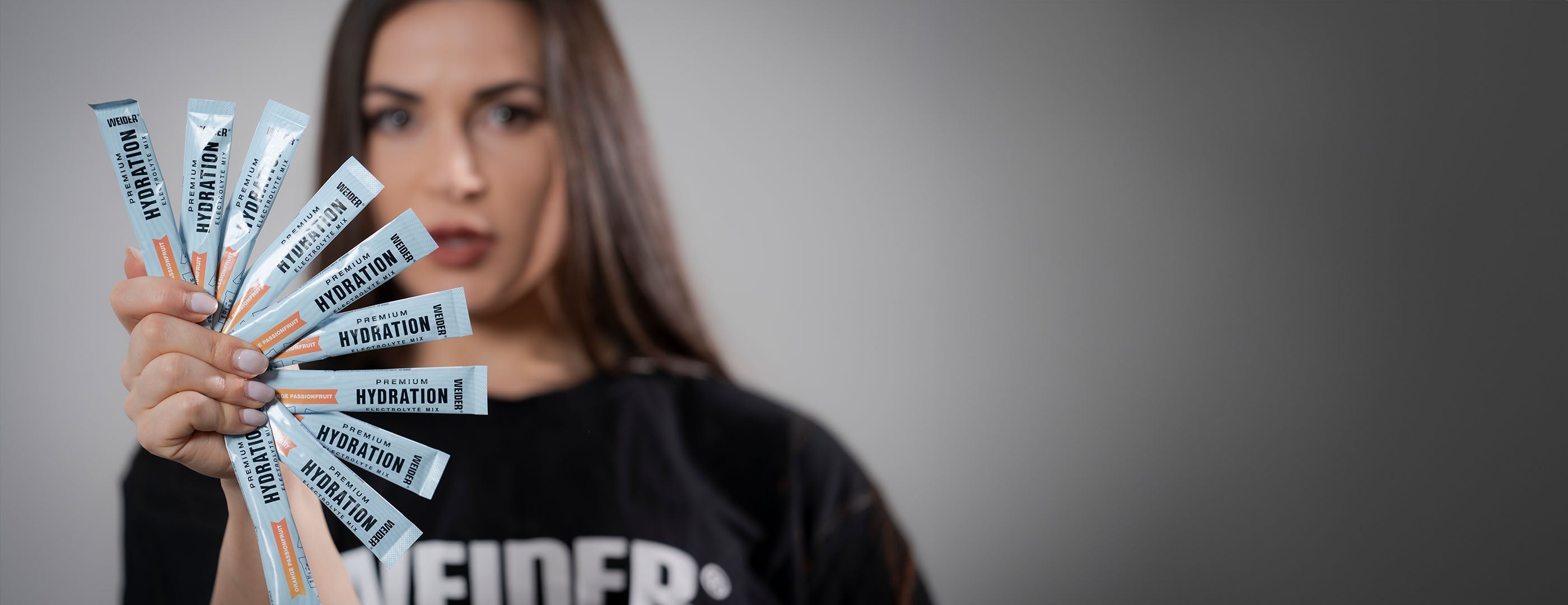
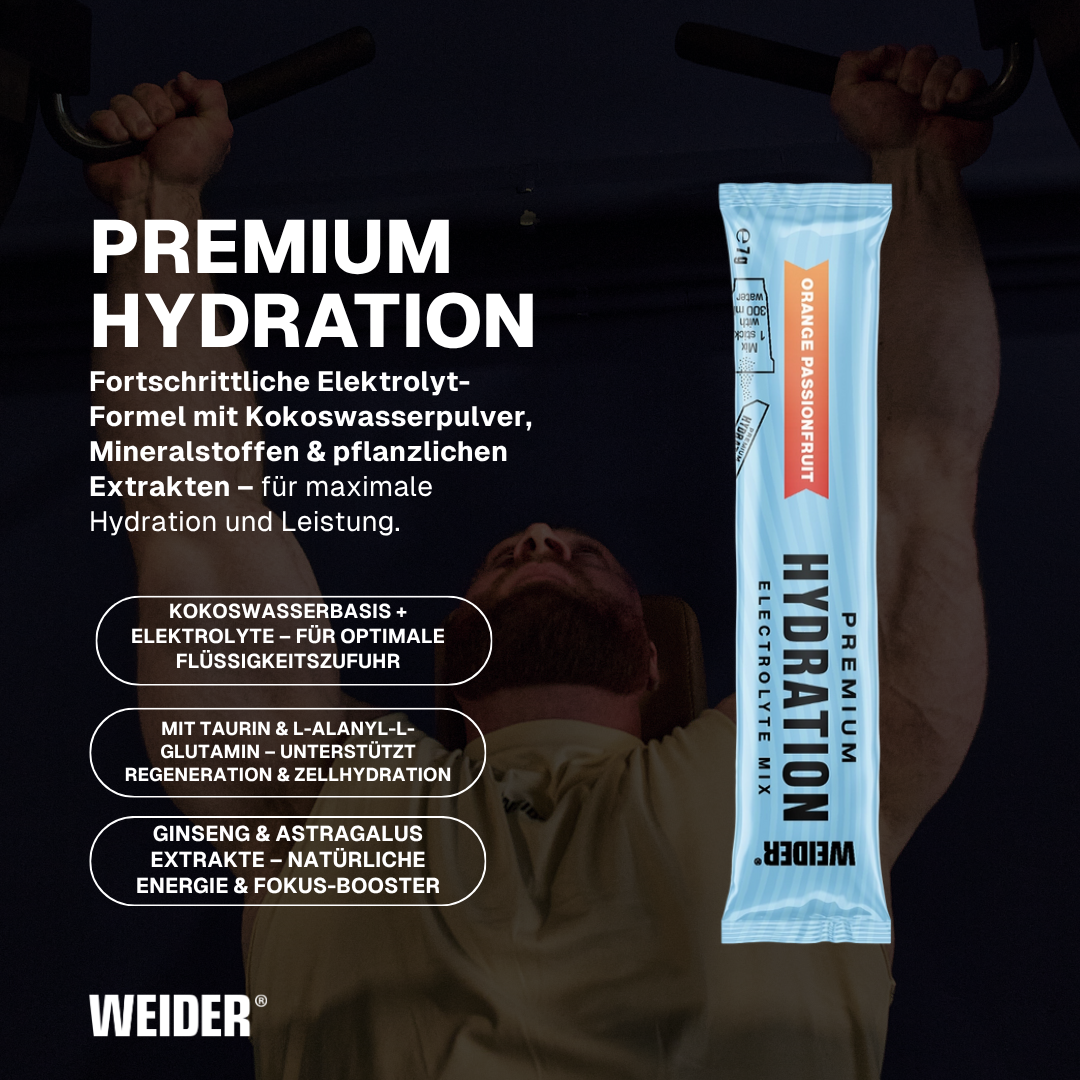
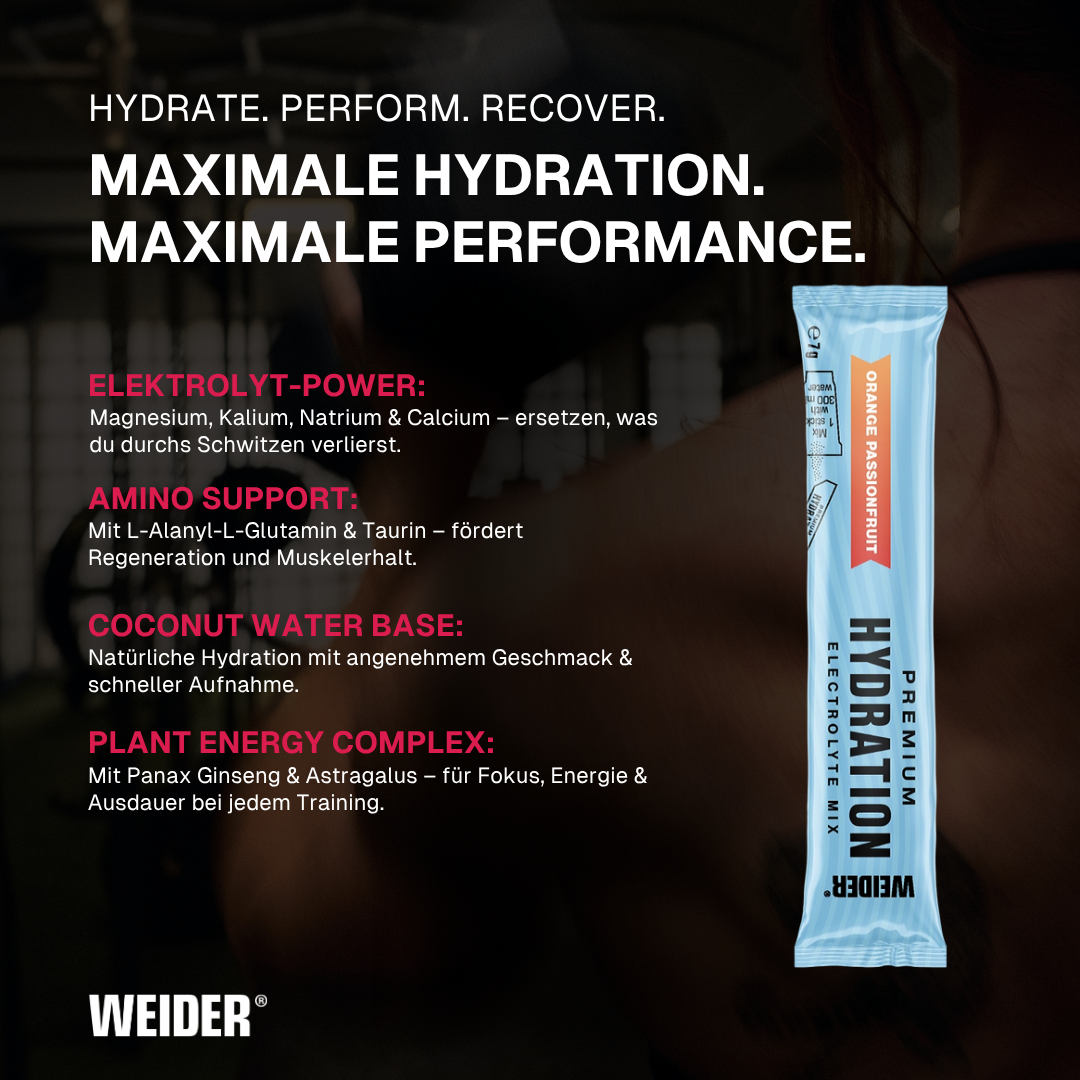
Therefore, we recommend electrolyte-containing sports drinks for rehydration during and after physical activity – such as our Premium Hydration Powder. The extremely convenient stick packs make preparation in any water bottle easy, so you can mix your refreshing electrolyte drink anytime, anywhere.
Besides the fact that our Premium Hydration provides a wealth of valuable ingredients, it also tastes outrageously delicious! Perfect for quenching any thirst.


Share:
Prejudices against protein? We're here to educate!
Creatine for sleep deprivation? What's behind the white powder for improved focus?